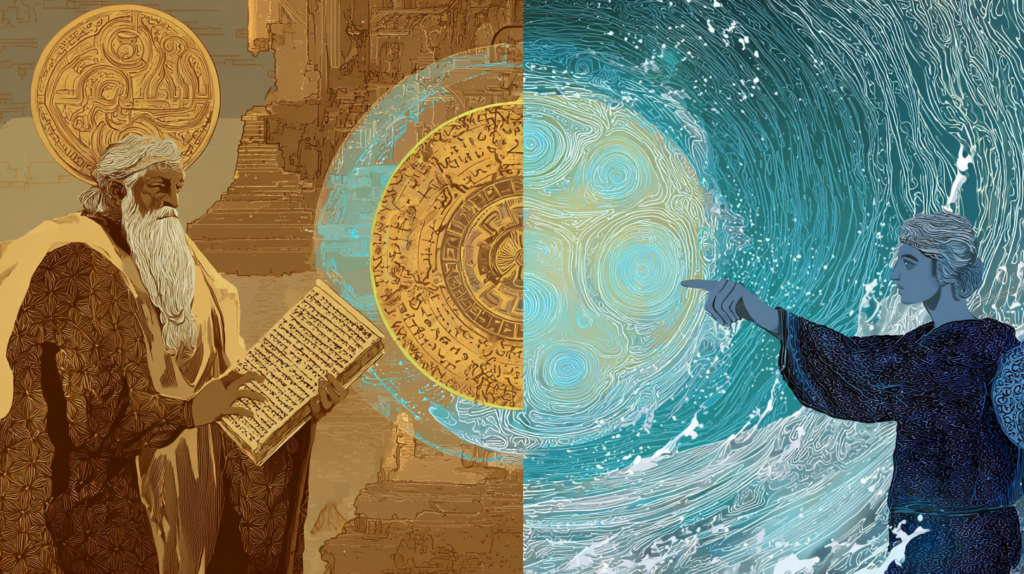
The images are stark and tragically familiar: once-thriving towns submerged, entire communities displaced, and the relentless, destructive power of water unleashed. From the unprecedented monsoon floods in Pakistan that drowned a third of the country, to the catastrophic collapse of dams in Libya, and the devastating flash floods that swept through parts of Germany, our world seems increasingly caught in the grip of watery devastation.
These aren’t just isolated incidents; they are stark reminders of humanity’s enduring vulnerability in the face of nature’s might, amplified by the realities of climate change. But why does this modern crisis, driven by scientific phenomena, resonate so deeply with something ancient, almost primal, in our collective consciousness?
Perhaps it’s because the stories of great deluges are as old as civilization itself. Today, we turn our gaze to one of the most compelling and earliest of these tales: the Mesopotamian myth of the Great Flood, found within the epic journey of Gilgamesh, and the figure of Utnapishtim. In this post, we’ll explore how these ancient narratives provide a powerful lens through which to understand our contemporary struggles with rising waters, bridging millennia to reveal timeless truths about human resilience and our complex relationship with the natural world.
A World Underwater
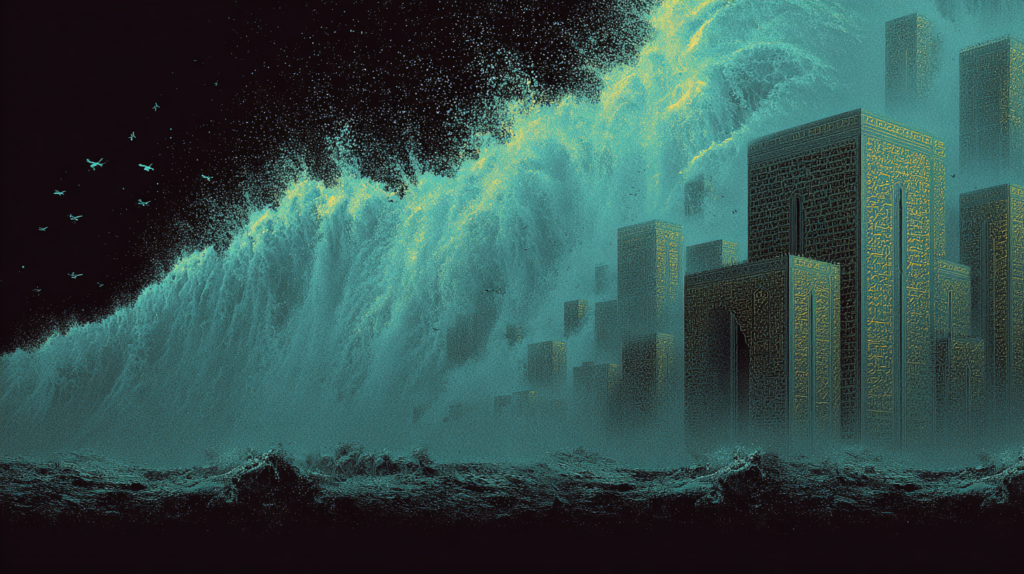
In recent years, the news cycle has been punctuated by scenes of water-driven disaster. The scale of the 2022 Pakistan floods, for instance, was almost unimaginable, displacing millions and causing billions in damages. Homes, infrastructure, and agricultural lands vanished under an inland sea. Then came the tragedy in Derna, Libya, where Storm Daniel unleashed torrential rains, overwhelming dams and washing entire districts into the Mediterranean.
Even highly developed nations are not immune. Germany’s Ahr Valley, a picturesque wine region, experienced flash floods in 2021 that claimed lives and shattered communities, leaving a scar that remains today. These events, while geographically disparate, share a common thread: an overwhelming influx of water, often exacerbated by climate change, pushing human systems to their breaking point.
Beyond the immediate devastation, these disasters bring forth deeper anxieties. They confront us with our perceived control over the environment and expose the fragile foundations upon which our societies are built. It’s a humbling, often terrifying, confrontation with forces far beyond our command.
Utnapishtim and the Mesopotamian Deluge
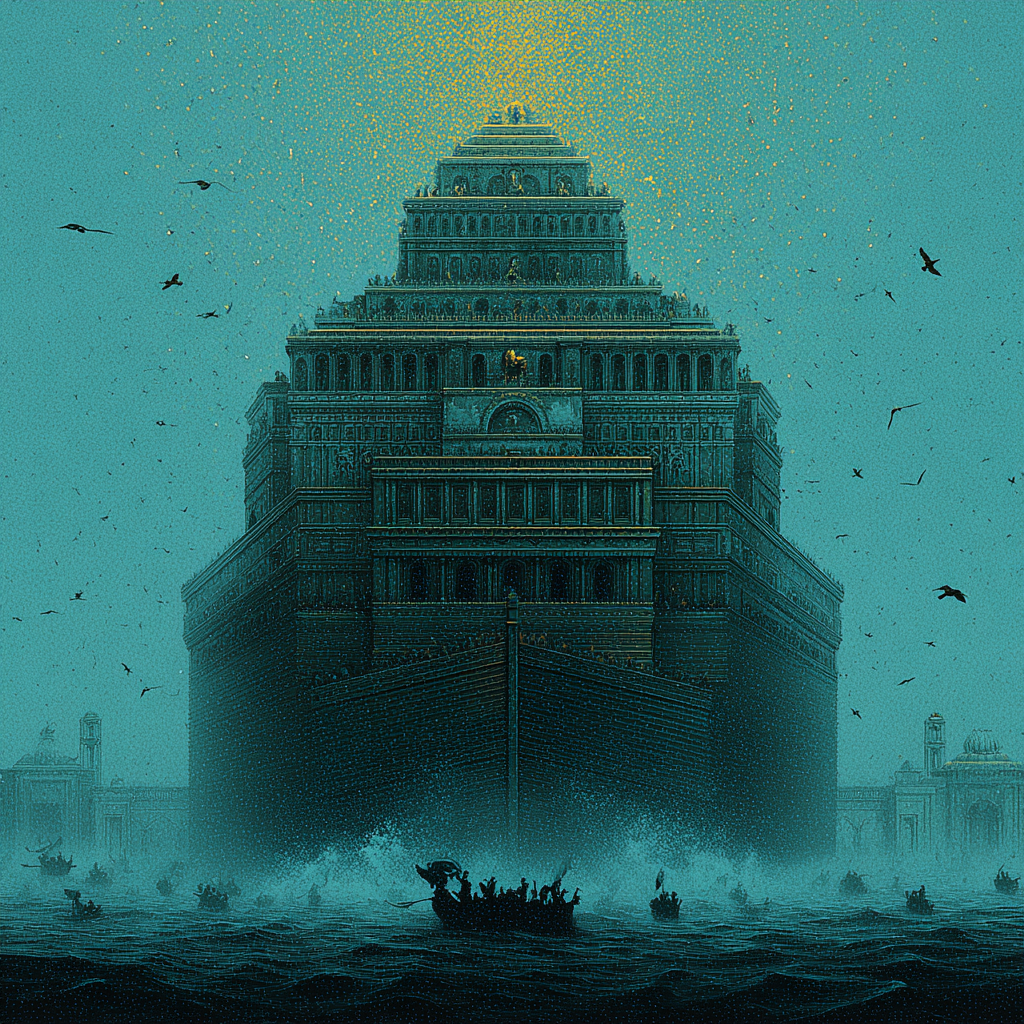
Thousands of years before these modern headlines, the people of ancient Mesopotamia grappled with similar fears. Their lands, cradled between the Tigris and Euphrates rivers, were fertile but also prone to devastating, unpredictable floods. Out of this lived experience emerged one of humanity’s earliest and most profound flood narratives: the story of Utnapishtim, the ‘Faraway’, told in the Epic of Gilgamesh.
In this ancient tale, the gods grew weary of humanity’s noisy existence. Enlil, the god of wind and storms, decided to wipe out humankind with a great deluge. However, the wise god Ea, secretly fond of a righteous man named Utnapishtim, whispered the gods’ plan to him in a dream. Ea instructed Utnapishtim to abandon his possessions, tear down his house, and build a massive boat, instructing him on its precise dimensions and construction.
Utnapishtim, obedient and bewildered, gathered his family, craftsmen, and “all the seed of all living things” onto his colossal vessel. The heavens then opened, and the waters rose for six days and seven nights. Even the gods themselves were terrified by the tempest, huddling “like dogs” and weeping at the destruction they had wrought.
On the seventh day, the storm abated, and Utnapishtim’s boat came to rest on the peak of Mount Nimush. He sent out a dove, then a swallow, and finally a raven, which did not return, signifying that the waters had receded. He emerged, offering a sacrifice to the relieved gods, who smelled the sweet savor and gathered like flies. Enlil, initially furious that anyone had survived, was eventually appeased by Ea, and Utnapishtim and his wife were granted immortality, dwelling “at the mouth of the rivers.”
What Utnapishtim Tells Us About the Climate Crisis
The parallels between Utnapishtim’s ancient ordeal and our modern climate catastrophes are strikingly profound, weaving a narrative that transcends time and culture. Both speak to humanity’s precarious position in a world governed by forces far greater than ourselves.
The first echo is the sheer scale of the disaster. Whether divine wrath or climatic shift, the experience is one of overwhelming, transformative destruction. The ancient Mesopotamians saw rivers overflowing their banks, consuming everything in their path. We see superstorms and melting glaciers doing the same. In both contexts, water, the source of life, becomes the agent of oblivion, forcing us to confront our fragility.
Next, consider the theme of warning. Utnapishtim received a divine whisper, a clandestine message enabling him to prepare. Today, the warnings come from climate scientists, decades of data, and increasingly sophisticated models. The difference, however, is profound: Utnapishtim heeded the warning of a single god; we, as a global society, often struggle to respond effectively to the collective warnings of an entire scientific community, delaying action until the floods are at our door.
The drive for survival and resilience is another powerful link. Utnapishtim built an ark, a vessel of hope and preservation. In the face of modern floods, communities likewise scramble to build defenses, develop early warning systems, and mount massive relief efforts. The instinct to protect life, to rebuild, and to find a way to endure is an enduring human trait, whether faced with mythical deities or the undeniable shifts in our global climate.
Finally, both narratives explore the aftermath – the world remade. For Utnapishtim, it was a new beginning, a path to immortality. For us, each flood disaster presents a stark choice: rebuild exactly as before, or adapt, innovate, and strive for a more sustainable, resilient future. The lessons of ancient fears and modern realities converge on this point: how we respond to the deluge determines the shape of the world that emerges from the receding waters.
Unravel the Threads of Myth with Saga
Conclusion
From the ancient plains of Mesopotamia to the flood-stricken valleys of Europe and the submerged villages of Africa and Asia, the story of the great deluge continues to unfold. The Epic of Gilgamesh, with its vivid account of Utnapishtim’s ark, is far more than a historical curiosity; it is a timeless narrative that mirrors our contemporary fears and challenges.
It reminds us that humanity has always lived in a delicate balance with nature, and that our understanding of, and respect for, its immense power is crucial for our survival. As we navigate the complexities of climate change, these ancient myths offer not just a sense of shared human experience, but also a profound reflection on our resilience, our capacity for forethought, and our ongoing quest for meaning in a world constantly reshaped by forces beyond our complete control.
What other ancient stories do you think hold surprising relevance for today’s world? Share your thoughts in the comments below!